

POD Book Publishing
This is an archived post from Book Design Made Simple.

In October 2026, the website BookDesignMadeSimple.com (founded by Fiona Raven and Glenna Collett) will be closing, and their co-written book will no longer be available for purchase.
While this is incredibly bittersweet news, Fiona and Glenna have generously allowed me to archive their blog posts on Hadley House to avoid having them disappear with their website. You can find all of their archived posts here.
Fiona and Glenna have made a huge impact on my life, teaching me so much about book design and giving me the hope, motivation, and confidence to succeed in this field. I am eternally grateful. It is an honor to learn from them. I think you will feel the same <3
Originally Published: September 9, 2019
By: Fiona Raven
Thinking of POD book publishing? So are we! When we published Book Design Made Simple, we got a good deal for printing both editions at Friesens in Canada. Offset printing cost us about 62% less than print on demand (POD) at Amazon. We also found a book distributor, which has housed our books and handled all of our orders ever since.
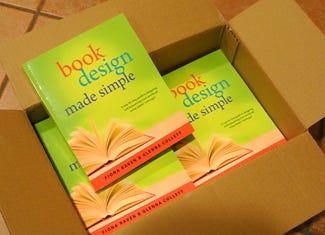
But now we’re running low on print books, and we need to decide what to do next. Should we do another offset print run, or switch to POD book publishing?
We’ve always said that POD is perfect for starting out self publishing. For example, we printed advance review copies to get reviews and test our market using POD at IngramSpark. We also believe that POD book publishing is perfect for backlist titles—books that aren’t new releases but need to be kept in stock as they are still selling well. Now that Book Design Made Simple is no longer a new release, POD book publishing may be a simpler option for us than continuing to print books and then ship, store, and distribute them through a distributor.
Self publishing using POD
There are many places where you can get your book “published” using POD, for example, Amazon KDP, IngramSpark, Lulu, and so on. (Note that we wrote an article comparing all these, and more, services.) They all offer to provide you with a free ISBN. Just to be clear, in this article we’re talking about self publishing your book using POD, meaning that you’ll have your own ISBN and not be using someone else’s. You’ll simply be using POD as an avenue for selling, printing, and shipping your print book.
Are POD books different from offset-printed books?
Yes, they do look a little different. Though for most readers it’s very subtle, and they would have to be looking at the offset and POD versions at the same time. Look for the following:
Images might not be quite as clear.
The paper may very well be different, as POD printers basically offer only one kind. We’re hoping that there will be very little see-through in our book, as we have a lot of illustrations.
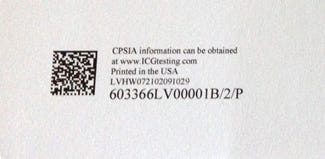
The last page of the book has a marker on it, something like the one you see to the right, and the ISBN appears, too. You’d never see this in an offset-printed book.
(See Digital vs. Offset Printing for a comparison on the two methods of printing.)
POD book publishing through Amazon
Of course you want to use Amazon for POD book publishing! There are lots of advantages to doing so, and here are the main ones:
4 great reasons to use Amazon
Widest audience. There’s no doubt that Amazon has a huge audience and reach. They offer shoppers all kinds of incentives to purchase, including discounts for purchasing multiple items, free shipping on minimum orders, and so on. Chances are good that you already have an account with Amazon and have made several purchases including books!
Amazon handles currency conversion, shipping, fulfillment, and returns. That’s right, Amazon will do all this for you! You won’t need to print books, store them, collect money in different currencies, package and ship the books, and deal with damaged books and returns.
Multiple formats. If you expand your print book to include ebook and audio editions, these will all be linked together to offer your readers choices of format.
Build your author platform. Amazon offers an Author Page where you can include your bio, links to events and blog posts, and of course your book. Readers can follow you to be notified of any changes or updates to your author page. (See Fiona’s author page)
But…there are also a few issues you need to be aware of when using Amazon for POD book publishing:
3 downsides to using Amazon
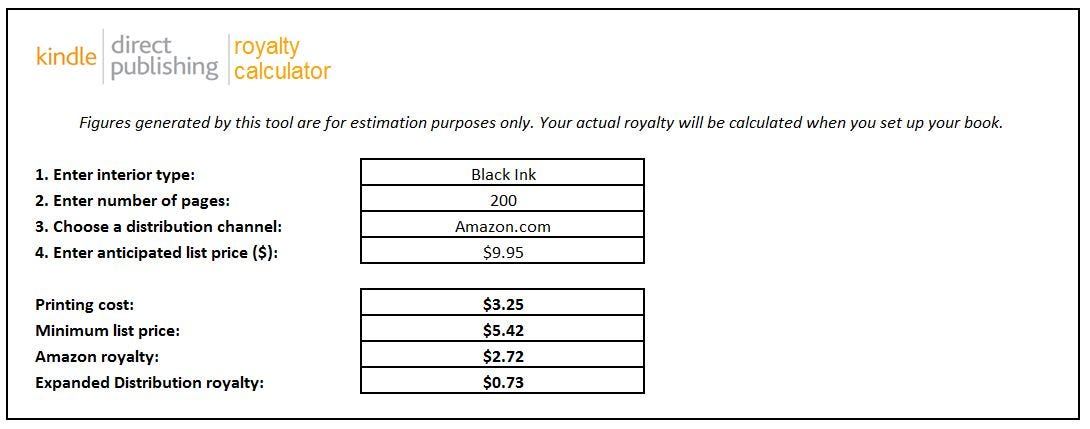
Amazon charges a lot for POD book publishing. If your book has a low retail price, you’ll find that after paying for printing, you may only get a dollar or two in sales per book. To estimate your costs, go to Printing Costs and Royalty Calculator and click the Download button to download an Excel spreadsheet. Here is an example for a 200-page paperback listed for $9.95:
Putting all your eggs in one basket. Even though Amazon is a giant company that isn’t likely to go out of business anytime soon, it’s possible that your book could get de-listed or sales could be affected by something that’s beyond your control. If Amazon has exclusive rights to your book sales, you could find yourself not being able to sell books if something goes sideways with Amazon.
Doesn’t provide industry-standard wholesale discounts or returns. Bookstores and libraries require the standard 55% wholesale discount and, more importantly, bookstores expect to be able to return books up to six months after purchase if they haven’t sold. Amazon, however, only allows returns within 30 days.
That last item—Amazon doesn’t allow returns after 30 days—is a huge downside! If your book, like ours, has a market in bookstores and libraries, you’ll want to use the workaround below.
Best method for POD book publishing
Providing you have your own ISBN, you’re free to use the POD services of more than one company. We recommend using Amazon KDP and IngramSpark. They are both POD giants and there are benefits to each.
Use Amazon KDP for selling on Amazon
List your book through Amazon KDP (formerly known as CreateSpace) and it will always appear “in stock” on Amazon. That’s the big advantage of having Amazon control the listing, printing, and distribution of your book on Amazon. And, of course, if your book is also available as a Kindle or audio book, shoppers will know what formats they can choose from.
But don’t sign up for KDP Select, as that gives Amazon exclusive rights to ALL sales and distribution of your book, and you don’t want that! Why not? Because libraries and bookstores don’t purchase from Amazon. They only purchase where they can get the industry-standard 55% discount, and where returns are allowed for up to six months.
Use IngramSpark for all other distribution
Ingram Book Group is THE major US wholesaler and distributor of books, specializing in library and bookstore sales. They also offer excellent worldwide distribution to IngramSpark users.
List your book through IngramSpark to take advantage of worldwide distribution. But don’t allow Ingram to do any distribution to Amazon since you’ll set that up directly through Amazon KDP. Be sure to set your discount to the industry-standard wholesale rate of 55%, and also to accept returns. That means libraries and bookstores, including Barnes & Noble, will be able to order your book.
Use Amazon and IngramSpark for POD book publishing
We recommend using Amazon strictly for sales on Amazon and using IngramSpark for all other sales. As long as you’re using your own ISBN (and the same ISBN for your book on both Amazon and IngramSpark), then all book sales from all sources will be attributed to your book. You’ll be getting the best of both worlds!