

Book Binding Basics
This is an archived post from Book Design Made Simple.

In October 2026, the website BookDesignMadeSimple.com (founded by Fiona Raven and Glenna Collett) will be closing, and their co-written book will no longer be available for purchase.
While this is incredibly bittersweet news, Fiona and Glenna have generously allowed me to archive their blog posts on Hadley House to avoid having them disappear with their website. You can find all of their archived posts here.
Fiona and Glenna have made a huge impact on my life, teaching me so much about book design and giving me the hope, motivation, and confidence to succeed in this field. I am eternally grateful. It is an honor to learn from them. I think you will feel the same <3
Originally Published: July 21, 2021
By: Glenna Collett
Like everything else, the ancient art of book binding is automated these days, and the array of available binding machines is amazing. This article aims to quickly explain the basics of book binding methods so you’ll be able to choose a book printer wisely.
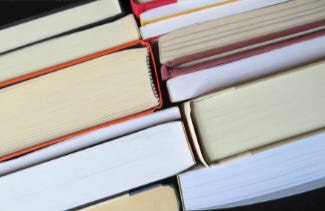
Book binderies can be separate entities but are usually integrated with a book printing company. And in some instances, printing and binding are done right inside the same machine.
Hard cover book binding (casebound books)
With offset and most digital book printing, the printing is done on large sheets and then folded into 4, 8, 12, 16, 24, or even 32 pages, depending on the machinery, the paper stock, and the trim size of the book. The end result is a booklet called a signature, with all the pages in order. It’s quite ingenious.
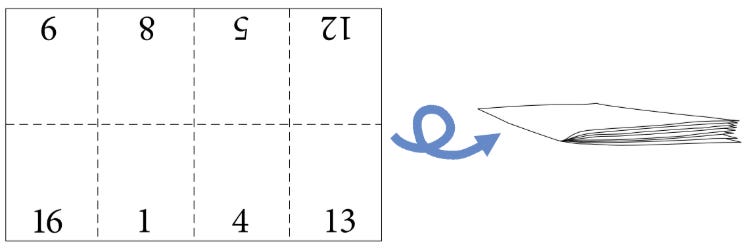
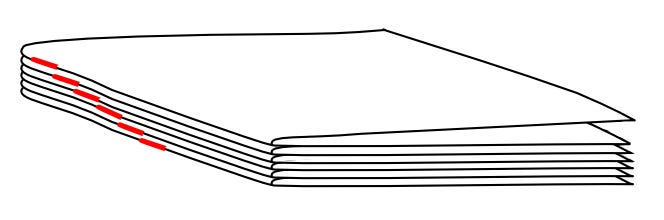
Your book might end up with a few or dozens of signatures, so in order to collate them properly, a small marker is printed on the back side of each one. (Even more ingenious.) The signatures are then lined up into a “book block” for binding, smashed together with a weight, and trimmed to achieve neat outer edges.
Stitching
Basically, stitching a book binding is the traditional method and is very durable. It’s done in two different ways.
Smyth (pronounced like “smith” but with a long i sound) sewing involves stitching from the middle of each signature to the outside and then over to the center of the next signature in a kind of looping motion. This results in a nice, easily-opened book and a flexible spine. The signature block can be glued to the inside of the spine or not—no glue results in a book that will stay open on its own (a “layflat” book).
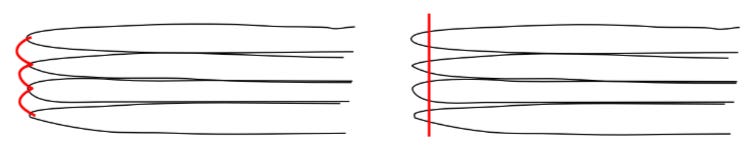
Side (or McCain) stitching is often used for books that are destined to a hard life, such as library editions, children’s books, and textbooks. The signatures are gathered and then sewn or stapled from the side rather than through the folds (see above).
The endpapers are attached to the first and last pages of the book block with a thin vertical line of glue near the stitching, and then the back edge of the book block (plus endpapers) is wrapped with a cloth (the “backing material” in the illustration).
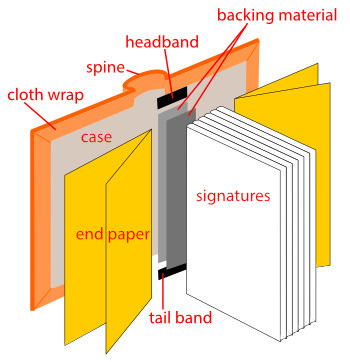
The wrap for the hard case can be cloth or a printable material. Wrapping the plain, foil stamped, or printed case is a separate operation. Once the wrapped case and the book block come together, the endpapers are glued to the inside of the case, leaving two free pages that are called the flyleaf. Sometimes a headband and tail band are added.
A flexible hard cover can also be made with the same book binding equipment. Instead of a thick, stiff cardboard case, a thinner one is used. This results in a book that looks just like a hard cover one but that’s also bendable. This is called flex binding.
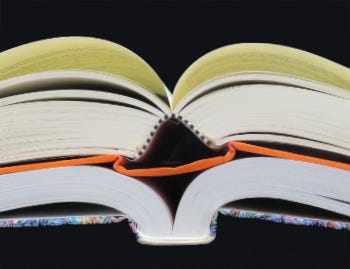
Soft cover book binding
Once you know how hard covers are put together, you’ll quickly catch on to the concept of paperback book binding. The method is called perfect binding; I’m not sure how it got this laudatory name, as paperbacks used to fall apart quite easily. Perfect binding has come a very long way, though, and actually is nearly perfect these days.
Basically, after the printing is done the signatures are gathered into a block just as for a casebound book. Then the signatures are smashed, the folds are simply chopped off, and the back edge is flooded with glue. After drying, this glued edge is usually adhered to the paper spine, but if not, then the result is a layflat paperback. After this, the entire book is trimmed to a nice smooth edge.
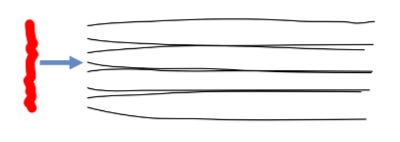
Two different kinds of glue can be used in the binding. EVA (ethylene vinyl acetate) and PUR (polyurethane reactive). The EVA is more traditional and costs less; the PUR is stronger and thus requires that less be used. This results in a book with a squarer spine that doesn’t crack when the book is opened. PUR may cost a little more.
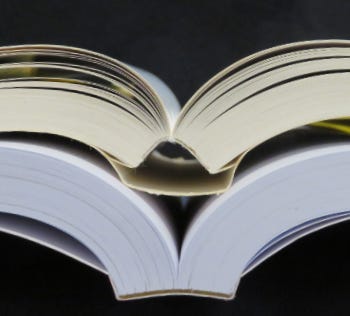
Espresso Book Machine book binding
An Espresso Book Machine (EBM) combines printing and binding all in one place. Some libraries and book stores own one for customers to print their own copies of out-of-print books or books they’ve written themselves. It’s hard to believe, but yes, you can give the machine two PDF files (one for the cover and one for the pages), and a perfect-bound copy will come out in just a few minutes.
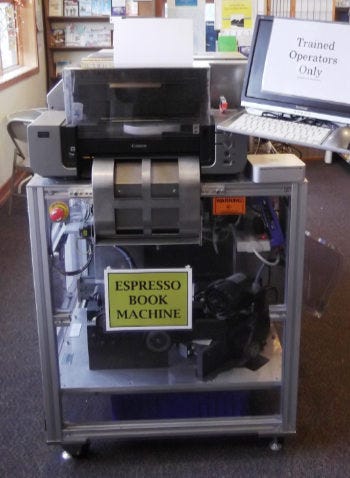
Some POD printers also use the EBM. But most these days also use a more elaborate digital printer that resembles an enormous copier. They bind the books separately.
Less common book binding types to consider
There are plenty of other kinds of bindings that might fit your book better than the more common hard and soft covers. Here are some ideas:
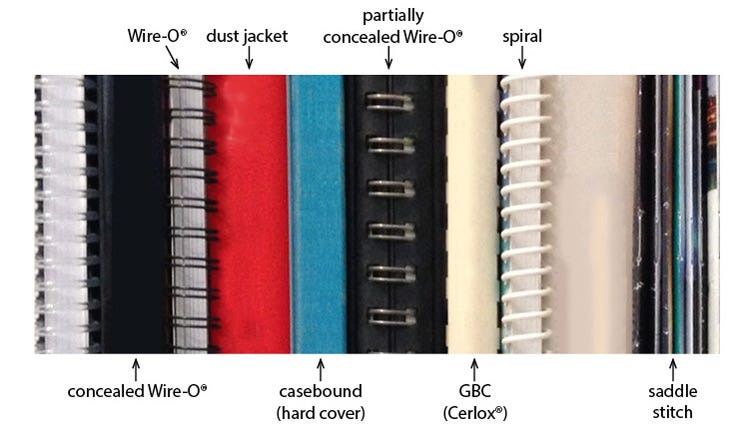
Saddle stitch Used for very short books that consist of only one signature (see pages 321–322). The signature is stapled two or three times at the fold.
Spiral Like a spiral notebook, with metal or plastic-coated wires.
GBC binding Also called Cerlox®, it holds the pages together with a cylindrical plastic comb. It requires rectangular holes to be punched near the inside edges of your pages. You can choose from many colors and sizes, and the binding can be printed on with your spine information. Consider using this for cookbooks or technical books.
Wire-O® binding Similar to spiral, but the wires are parallel to each other and in pairs. Used sometimes for technical or reference material.
Concealed Wire-O Like Wire-O, but the front-cover material continues across to the back (as in a hardcover book) and conceals the wires so the spine can be printed on.
In most of the bindings listed above, the inside margin on your pages must be wide enough to allow for the holes that need to be punched for the binding (usually 0.5″). Ask your printer for their requirements.
Your book will lie open flat with all of these types of binding.
* * *
Please note that you cannot use any of the book binding styles in the list above with POD printing. What is POD printing? It stands for print on demand, and you can compare it with other book printing options here.
We believe that all publishers should understand how their books will be put together. Knowledge is power!